
Category: business

  • Recurring Payments Done Right: Why Utilities & Service Providers Must Rethink Their Billing Systems

    For utilities and service providers, recurring payments are not just transactions.

    They are the engine of operational stability.

    Water companies. Internet providers. Security firms. Waste management companies. Energy contractors. Facility managers.

    Their revenue doesn’t depend on one-time sales.
    It depends on consistent, predictable collections month after month.

    And yet, many still manage recurring billing using fragmented systems, manual reminders, and reactive follow-ups.

    That’s where the cracks begin.


    The Hidden Cost of “Almost Working” Billing Systems

    On paper, recurring payments sound simple:

    1. Generate invoice
    2. Send to customer
    3. Receive payment
    4. Reconcile

    But at scale, complexity increases.

    • Thousands of customer accounts
    • Different billing cycles
    • Partial payments
    • Multiple payment channels
    • Missed deadlines
    • Manual reconciliation

    Suddenly, finance teams spend more time chasing payments than analyzing business performance.

    The result?

    Unpredictable cash flow.
    Customer frustration.
    Internal inefficiencies.

    And in service-based industries, unpredictability is expensive.


    Predictability Is Power

    Recurring revenue should create confidence — not anxiety.

    When payment systems are structured correctly:

    •  Invoices are generated automatically
    •  Reminders are triggered systematically
    • Customers have seamless payment options
    • Transactions reconcile in real time
    • Finance teams gain full visibility

    This transforms billing from a monthly scramble into a structured, repeatable system.

    Predictability allows:

    • Better financial planning
    • Stronger vendor relationships
    • Improved service delivery
    • Reduced operational risk

    In industries where reliability is the product, payment systems must be just as reliable.

    It’s Not Just About Collections, It’s About Trust

    For utilities and service providers, trust is everything.

    Customers expect:

    • Clear billing
    • Easy payment processes
    • Transparent confirmations
    • Accurate records

    When billing errors occur or reminders are inconsistent, it affects more than revenue. It affects perception.

    And perception directly impacts retention.

    Well-designed recurring payment systems protect both cash flow and credibility.

    The Strategic Shift

    The conversation is shifting from:

    “How do we collect payments?”

    to

    “How do we design systems that make collections seamless?”

    For growing utilities and service providers, recurring payments should not depend on follow-ups, spreadsheets, or manual oversight.

    They should depend on systems.

    Because stable collections create stable operations.
    And stable operations create sustainable growth.

    At Kiotapay, we believe recurring payments should feel predictable; not pressured.
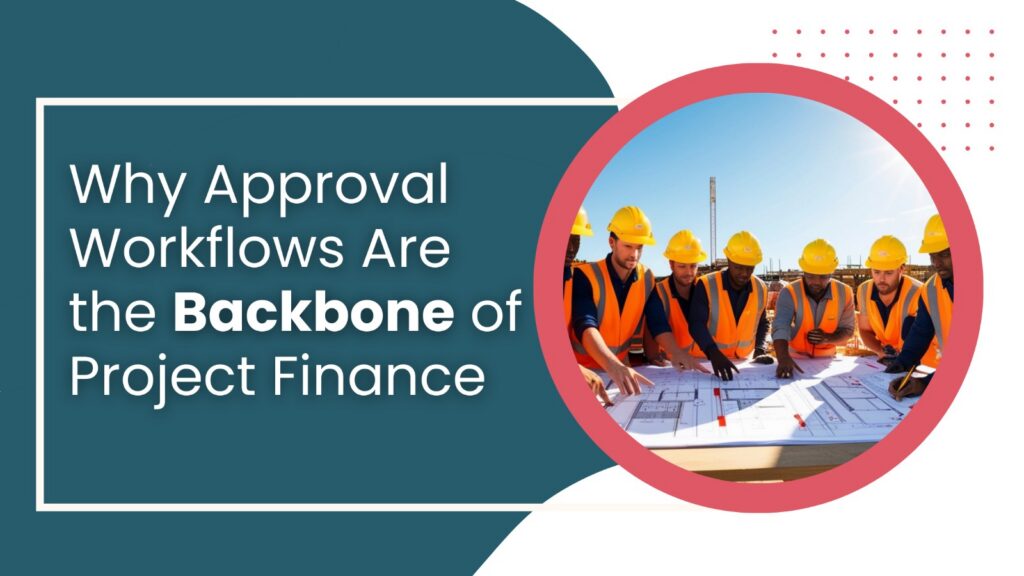
  • Why Approval Workflows Are the Backbone of Project Finance

    Infrastructure finance is not complicated because payments are difficult.

    It’s complicated because projects move fast and money moves across many hands.

    The real challenge is rarely the invoice.

    The challenge is control.

    That’s why approval workflows are not optional.

    Approval workflows are the backbone of project finance.


    Without Approvals, Payments Become Guesswork

    On most infrastructure projects, spending decisions happen everywhere.

    Site managers request funds.
    Contractors submit invoices.
    Procurement teams approve suppliers.
    Finance teams release payments.

    When approvals are informal or scattered across emails and phone calls, the outcome is predictable:

    • Budgets leak quietly
    • Duplicate payments occur
    • Delays grow from confusion
    • Accountability becomes unclear

    Without structure, payments become reactive instead of intentional.


    Approvals Are Not Bureaucracy; They Are Protection

    Many teams assume approvals slow projects down.

    But strong approval systems do the opposite.

    They protect execution.

    A structured workflow ensures:

    • The right payment goes out
    • At the right time
    • For the right purpose
    • With full visibility and accountability

    Approvals are how finance teams stay proactive instead of constantly cleaning up after decisions have already been made.


    Strong Workflows Create Strong Projects

    When approval workflows are clear and consistent:

    ✅ Spending stays aligned to budget
    ✅ Payments don’t get stuck in email threads
    ✅ Finance gains real-time oversight
    ✅ Project execution becomes smoother

    This is what separates high-performing infrastructure teams from struggling ones.


    Final Thought

    Project finance is not just about paying bills.

    It’s about managing trust, timing, and control.

    And nothing enables that more than a strong approval workflow.

    Approvals are not red tape.

    They are infrastructure finance discipline.

  • How Multi-Site Contractors Lose Money Through Payment Fragmentation

    In infrastructure and construction, money doesn’t just move; it leaks.

    Not because projects aren’t profitable…

    But because payments are often fragmented across too many sites, too many vendors, and too many disconnected processes.

    For multi-site contractors managing roadworks, housing developments, utilities, or large-scale civil projects, payment fragmentation is one of the most silent and expensive operational risks.

    Let’s unpack how it happens and why it costs more than most teams realize.


    What is Payment Fragmentation?

    Payment fragmentation occurs when contractor payments are handled through scattered systems and inconsistent workflows, such as:

    • Vendor payments processed from different bank accounts
    • Approvals happening over WhatsApp or email
    • Site teams managing petty cash separately
    • Budgets tracked in spreadsheets that don’t sync
    • Finance teams reconciling after the fact, not in real time

    Instead of one clear process, payments become spread across multiple channels.

    And that’s where control begins to break down.


    Where Multi-Site Contractors Lose the Most Money

    1. Duplicate or Unverified Payments

    When multiple projects are running simultaneously, it’s easy for the same supplier invoice to appear twice; especially when site teams submit requests independently.

    Without centralized visibility, finance teams may pay:

    • The same vendor twice
    • The wrong amount
    • An invoice that wasn’t fully approved

    These small errors add up quickly across dozens of sites.


    2. Budget Drift Across Projects

    Multi-site contractors rarely overspend intentionally.

    Overspending happens because no one has a complete view of:

    • What has been committed
    • What has already been paid
    • What remains in each project budget

    So costs “drift” quietly until the project is already over budget.

    Fragmented payments make it almost impossible to enforce real-time budget discipline.


    3. Approval Delays That Stall Operations

    In construction, timing is everything.

    When approvals are scattered across phone calls, emails, and paper trails, payments slow down.

    And delayed payments lead to:

    • Supplier delivery holds
    • Workforce disruptions
    • Equipment downtime
    • Project timeline extensions

    The cost of delay is often far greater than the payment itself.


    4. Vendor Relationship Damage

    Suppliers want predictability.

    When payments are inconsistent, unclear, or late, contractors lose trust and eventually bargaining power.

    This results in:

    • Higher supplier pricing
    • Reduced credit terms
    • Preference given to competitors
    • Less flexibility during emergencies

    Fragmentation doesn’t just affect cash flow; it affects reputation.


    5. Reconciliation Becomes a Monthly Firefight

    For many finance teams, month-end reconciliation feels like damage control.

    Payments are sitting in:

    • Bank statements
    • Mobile transfers
    • Manual logs
    • Email approvals
    • Site-level reports

    Instead of strategic oversight, finance becomes reactive.

    Teams spend more time chasing records than managing costs.


    6. Increased Exposure to Fraud and Leakage

    The more fragmented the process, the easier it becomes for unauthorized payments to slip through.

    Common risk points include:

    • Off-system vendor requests
    • Informal approvals
    • Limited audit trails
    • Site-level cash handling

    Without structured workflows, financial leakage becomes inevitable.


    The Real Cost Isn’t Just Money; It’s Control

    Payment fragmentation creates an environment where:

    • Finance teams lose visibility
    • Project managers lose accountability
    • Leadership loses confidence in reporting
    • Costs rise without clear explanations

    And by the time issues are discovered, the money is already gone.


    How Contractors Can Fix Payment Fragmentation

    The solution isn’t more spreadsheets.

    It’s centralized payment control built specifically for multi-project environments.

    Modern contractors are moving toward systems that provide:

    ✅ Project-based payment workflows
    ✅ Multi-level approvals
    ✅ Vendor payment tracking
    ✅ Budget controls per site
    ✅ Real-time visibility for finance leaders
    ✅ Audit-ready records automatically

    Because infrastructure growth requires financial clarity.


    Final Thought

    Construction is complex enough.

    Contractors shouldn’t be losing money simply because payments are scattered.

    When payment systems are unified, contractors gain more than efficiency — they gain control, trust, and profitability across every site.


    Want to See What Centralized Contractor Payments Look Like?

    Kiotapay helps infrastructure and construction teams manage payments across multiple projects, vendors, and approval layers;

    All from one controlled platform.

    Let’s talk.

    info@kiotapay.com